
Supply Chain Track and Trace Solutions


45%
40%
50%
50%
About
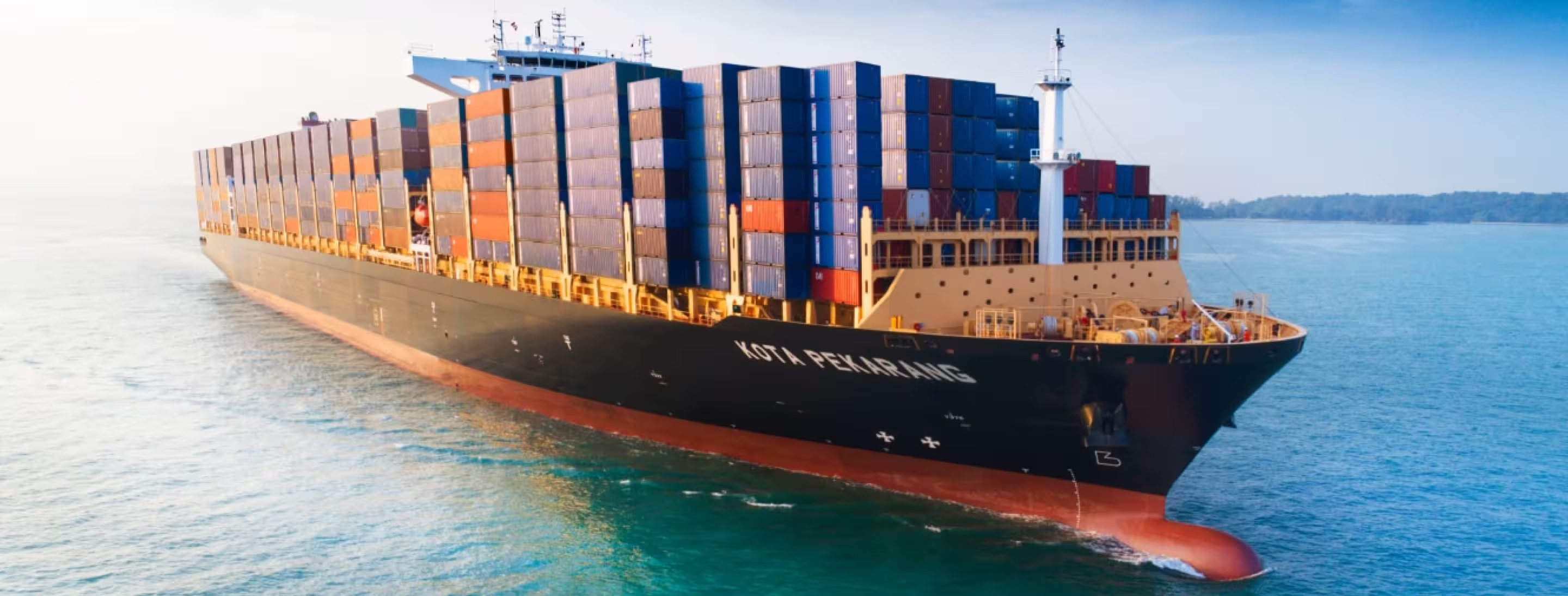
Pacific International Lines (PIL) is one of the largest shipping companies in Asia, operating a modern fleet of container vessels and providing logistics-related services worldwide. With decades of experience, the company has built a reputation for reliability and scale, but the rapid evolution of global trade and digital expectations demanded a new level of operational transparency.
Business Challenges
Despite its strong position in the shipping industry, PIL faced growing challenges:
- Lack of end-to-end visibility across shipments, making it hard to monitor container locations in real time.
- Inefficient manual processes, leading to delays in tracking and reporting.
- Increasing customer demands for transparency and proactive shipment updates.
- Risk of losses from misplaced cargo, delays, or unauthorized container handling.
- Compliance requirements with international trade and customs regulations.
PIL needed a digital-first approach to modernize its supply chain management, ensuring greater visibility and reliability.
Solution
We implemented a comprehensive supply chain track and trace solution powered by IoT (Internet of Things) and real-time analytics.
Key solution features included:
- IoT-enabled sensors installed on containers to capture location, temperature, and handling data.
- Cloud-based platform integrating all shipment data for centralized visibility.
- Automated alerts and notifications to flag delays, route deviations, or mishandling.
- AI-driven predictive analytics to forecast delivery times and optimize shipping routes.
- Customer-facing dashboards allowing clients to track shipments directly.
This transformed PIL’s supply chain into a digitally connected ecosystem.
Our Approach
Our Steps
Outcome
The supply chain track and trace solution delivered measurable impact:
- 50% reduction in shipment tracking time with automated real-time visibility.
- Improved customer trust through transparent and proactive updates.
- Minimized risks of cargo misplacement by early anomaly detection.
- Faster compliance reporting with automated data logs for customs authorities.
- Enhanced operational efficiency by reducing manual tracking tasks.
PIL not only improved its supply chain reliability but also positioned itself as a technology-driven leader in global logistics.
Frequently Asked Questions
How do shipping companies implement real-time container track and trace?
By deploying IoT sensors on containers and integrating data into a cloud platform with customer-facing dashboards. PIL reduced shipment tracking time by 50% and improved ETA accuracy by 40%.
What IoT technology powers supply chain track and trace for container shipping?
IoT sensors capturing GPS location, temperature, and handling events — fed into a cloud platform with AI-driven predictive analytics for ETA forecasting and anomaly detection.
How do shipping companies give customers real-time cargo visibility?
Through customer-facing dashboards that show live container location, estimated arrival, and automated alerts for delays or route deviations — eliminating the need to call customer service.
What is the ROI of supply chain track and trace for large container shipping lines?
PIL achieved 50% faster tracking, 40% better ETA accuracy, 50% higher self-service resolution, and 50% improved customer satisfaction — with faster customs compliance reporting as an added benefit.
Selected Work




Ready to Streamline Your Logistics?
